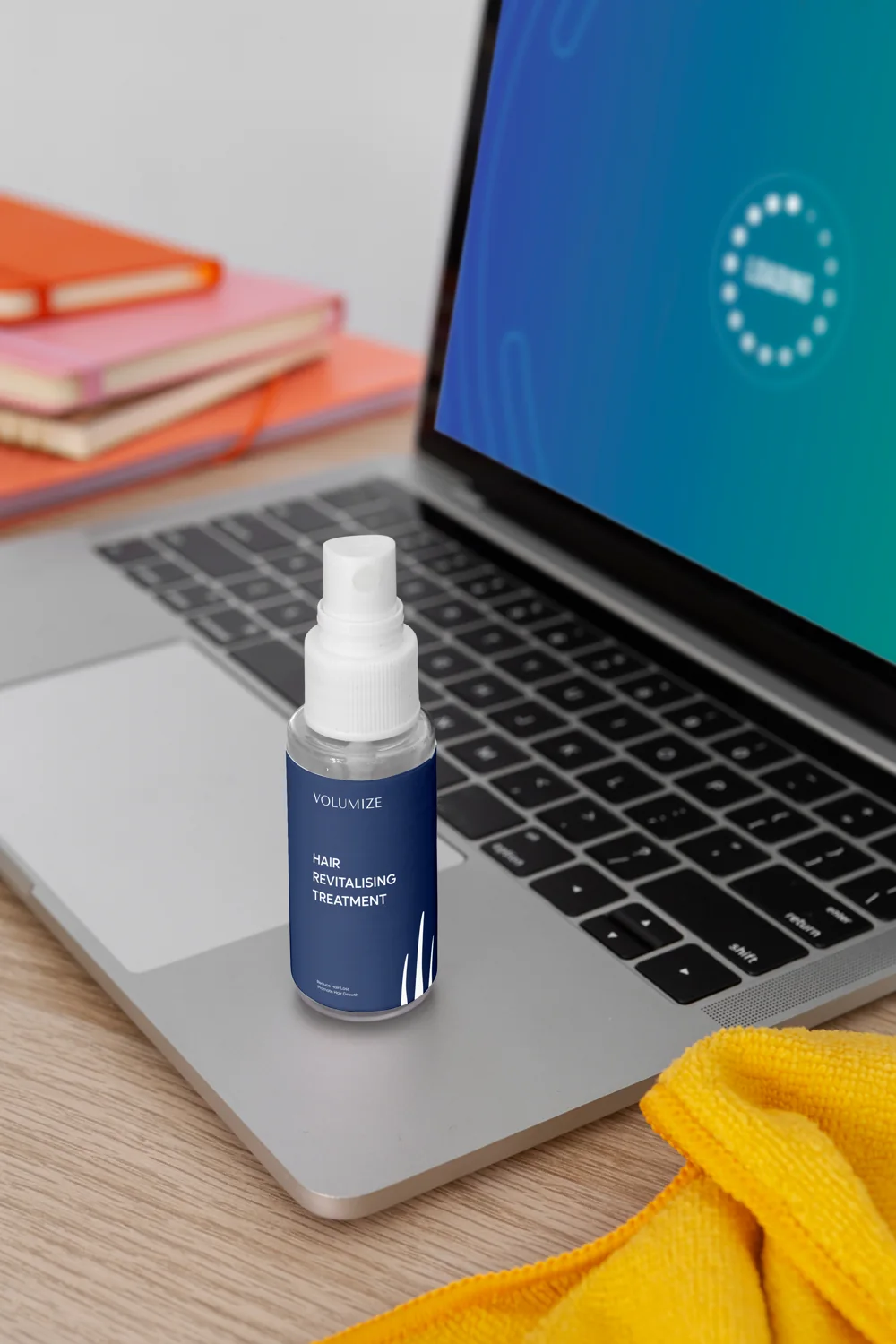
Tell us about you
Complete an online questionnaire about your hair, health and current medicines. Take it at your own pace.

Understand your options with an online assessment, individual clinical guidance, and a routine designed around you.
For men aged 18+. Clinical assessment required. Individual results vary.


Complete an online questionnaire about your hair, health and current medicines. Take it at your own pace.
Your information is reviewed to understand suitability. Where appropriate, your clinician will discuss a personal treatment plan.
If treatment is prescribed, receive it discreetly with instructions. Stay in touch and review your progress over time.
Treatment is a clinical decision. Your assessment helps the team understand what is appropriate for you.
Your hair has its own story. Select what you have noticed to explore a helpful starting point.
A gradual change at the temples can be a sign of pattern hair loss. A clinician can help assess the cause and appropriate next steps.
Understand your hair lossVOLUMIZE / PERSONALISED CAREBegin with the right questions. A clinician considers your history, your concerns and your suitability before advising on any treatment.
Any prescription is issued only after a clinical assessment.
Read the ingredients, pricing and safety information for your capsule or spray plan. A clinician confirms suitability.

Finasteride 1 mg + Minoxidil 2.5 mg + Biotin 10 mg
Read treatment information
Dutasteride 0.5 mg + Minoxidil 2.5 mg + Biotin 10 mg
Read treatment information
Finasteride + Minoxidil + Azelaic acid. Explore the ingredients, supply periods and clinical considerations.
Explore the Advanced Spray PlanKnow who supports your care. Volumize’s dispensing pharmacy is Milnthorpe Pharmacy, with registration details you can check for yourself.

Volumize clinical assessment
Our dispensing pharmacy partner
Patient imagery from Volumize. Individual results vary. Lighting, styling and camera angle differ. Timeframe and treatment details are not supplied with this gallery.
Every head of hair is different. Explore imagery shared by Volumize, with a realistic view of what photographs can—and cannot—tell you.
Patient journey 2 · Images from Volumize · Individual results vary
Patient journey 3 · Images from Volumize · Individual results vary
Patient journey 4 · Images from Volumize · Individual results vary
Patient journey 5 · Images from Volumize · Individual results vary
Patient journey 6 · Images from Volumize · Individual results vary
Hair care is a routine, not a race. Understand the process, track the changes, and give your plan time.
Focus on using your plan as directed and recording a clear starting point. Visible changes may be limited early on. Ask your clinician what to expect and when to get in touch.
An illustrative care journey. Follow your individual clinical advice.Compare photographs taken in similar conditions and discuss your experience with the clinical team. Progress is individual; do not change your treatment without advice.
An illustrative care journey. Follow your individual clinical advice.A longer review can help your clinician assess benefit and decide on next steps. Some treatments need 6–12 months to judge response. Outcomes and review schedules depend on the treatment prescribed.
An illustrative care journey. Follow your individual clinical advice.In male pattern hair loss, genetics and sensitivity to DHT can lead to gradually finer hairs. Other causes need a different approach, which is why assessment matters.
Some scalp follicles gradually produce thinner hairs. This process is known as miniaturisation.
Your history, symptoms and pattern of change help a clinician assess the cause and decide whether treatment or further investigation is appropriate.
Learn more with the British Association of Dermatologists, or explore our guide.
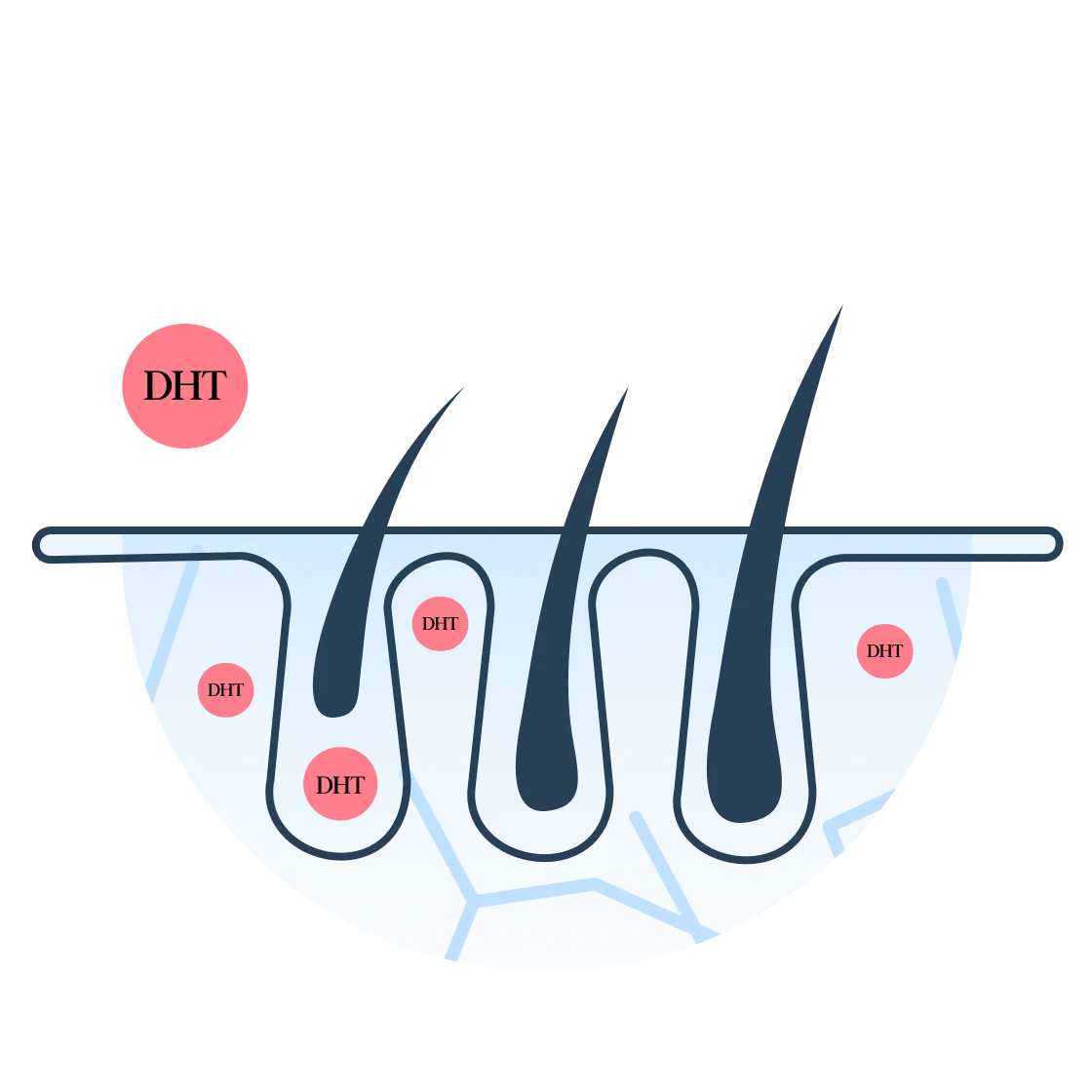
Illustration of the follicle environment
Assessment, treatment, delivery and support. Find the information you need in one place.
Volumize’s online service is designed for adult men aged 18 and over with concerns about pattern hair loss. An assessment helps establish whether the service and any treatment options are appropriate for you.
You share information about your hair loss, general health and current medicines through Volumize’s assessment service. A clinician reviews your information before treatment is considered. Completing a questionnaire does not guarantee a prescription.
It is sensible to understand the cause before starting treatment. In particular, sudden or patchy loss, scalp pain, redness or other new symptoms need medical advice. The NHS recommends speaking with a GP about the cause before using a commercial hair clinic.
This online pathway is intended for adult men. Women experiencing hair loss should speak to a GP or an appropriate clinician for an assessment, because causes and treatment suitability can differ.
Male pattern hair loss involves inherited susceptibility and the effect of the hormone DHT on certain scalp follicles. The affected hairs can gradually become finer. A clinician can help distinguish this pattern from other causes of hair loss.
Yes. Genetic factors can come from either side of the family. A family history can be useful information for your clinician, although it does not predict exactly how your own hair will change.
Stress, illness, weight loss and nutritional problems can be associated with temporary shedding. A new change should be assessed rather than assumed to be male pattern hair loss.
No. Response depends on the cause, the treatment and individual circumstances. A clinical assessment is important, and no treatment can promise regrowth for every person.
Agree a review schedule with your clinician. Hair changes take time, and some treatments need 6–12 months before benefit can be judged. Consistent photographs and an honest account of your experience make reviews more useful.
Yes. Medicines can have side effects and are not suitable for everyone. Your clinician should explain the relevant risks, alternatives and what to do if symptoms occur. Read the information supplied with your treatment and contact the clinical team with concerns.
Some hair loss treatments need ongoing use to maintain benefit. Speak to your clinician before stopping or changing your plan, so you understand what is likely to happen in your situation.
An everyday hair care routine can be part of looking after your hair. Persistent loss or new scalp symptoms still deserve an assessment. Ask a clinician whether supplements are appropriate for your circumstances.
Current plan options, prices, billing intervals and any renewal terms are provided through Volumize’s existing assessment and plan service. Check the total amount due, future charges and cancellation terms before placing an order.
Where a clinician prescribes treatment, Volumize offers discreet delivery. Delivery arrangements and applicable charges are confirmed during ordering. See the delivery and returns policy for current terms.
Use your Volumize account or contact info@volumize.co.uk for help with your plan. Check your applicable billing and cancellation terms; do not change prescribed treatment without clinical advice.
The Volumize Promise is a conditional refund programme with eligibility, photo-tracking, treatment-use and claim-window requirements. It is not a guarantee of regrowth. Read the full current terms and ask the team about eligibility before joining.
Email info@volumize.co.uk. Published support hours are Monday–Friday, 9:30am–5pm. For urgent medical advice use NHS 111, or call 999 in an emergency.
No questions match your search. Try another word, or contact the team below.
A photograph, a different hairstyle, a little more scalp in the mirror. Noticing a change can raise questions. Start by understanding what you are seeing.
A gradual change at the temples or crown may fit the pattern of inherited hair loss. A clinician considers the shape, timing and history of the change, rather than one photograph in isolation.
Write down when you first noticed it, whether it has changed steadily, and whether relatives have experienced something similar. This gives your clinician a more useful starting point than trying to diagnose yourself from a picture online.
Compare like with like: the same lighting, a similar hair length and the same camera angle. Wet hair, a new parting or a bright overhead light can change how dense hair appears.
Keep a short, dated photo record. Avoid checking repeatedly throughout the day; a structured record is easier to discuss at an appointment.
Seek medical advice if loss is sudden or patchy, or if you have new scalp pain, redness, scaling or other symptoms. Tell a clinician about recent illness, stress, weight changes and medicines, too.
If you are concerned, a GP can help assess the cause. An online service should also explain its limits and whether you need an in-person review.
A good first step is clarity: understanding the likely cause, the available choices and the realistic limits of treatment.
Knowing what to expect makes it easier to take the first step. Here is how to prepare for an online conversation about your hair.
Choose somewhere private, with your medical information to hand. Take the questionnaire at a pace that lets you answer accurately. Clinical decisions depend on the quality and completeness of the information you provide.
Tell the clinician what you want help with. You may be looking for an explanation, a manageable routine or an understanding of the available options. It is also helpful to say what you would find difficult to keep up with.
Questions about risks, alternatives, ongoing costs and follow-up are part of an informed decision. You should understand the plan before choosing to proceed.
Completing the assessment does not guarantee treatment. A clinician may need more information, recommend an in-person appointment or advise that a particular option is unsuitable. This is part of making an individual decision about your care.
Use Volumize’s assessment service to share health information. The general contact form is for non-clinical enquiries and should not be used to send sensitive medical details.
Before an order, check the full plan cost, payment frequency, delivery arrangements and renewal or cancellation terms. If a treatment is prescribed, read the instructions and ask how to contact the team with questions.
A simple photo routine can make progress easier to discuss. Consistency is more useful than a perfect picture.
Pick a place with steady, even lighting. Avoid changing between direct sunlight, a bright bathroom light and a dim bedroom. Use the same camera and distance whenever possible.
Keep a note of your setup: where you stand, where the light comes from and how you hold the camera. Asking someone to help can make awkward angles more consistent.
Follow the photo instructions supplied with your plan. Do not send photographs through a general enquiry email unless the clinical team has specifically told you to do so.
Photograph your hair in a similar condition each time. Note a haircut, a change in colour or any styling product that may affect the comparison. Avoid filters, retouching or camera effects.
Save the date with each photo set. Add a brief note about your routine and any questions you want to discuss. Follow your agreed review schedule rather than making decisions from daily comparisons.
Your experience matters too. Tell your clinician about changes, symptoms, missed doses or practical difficulties. Do not adjust prescribed treatment based on photographs alone.
Store your photos somewhere secure and use the clinical service’s approved upload process when sharing them. Only share what is needed for your assessment or review.
Support hours
Monday–Friday, 9:30am–5pm
For questions about treatment suitability, use the clinical assessment service. Please keep sensitive medical information out of general enquiries.
Start your clinical assessmentNeed urgent medical advice? Use NHS 111. In an emergency, call 999. This service is not monitored for emergencies.
Tell us about your hair. Let a clinician help you understand your options.
Start my assessmentFor men aged 18+. Clinical assessment required. Results vary.